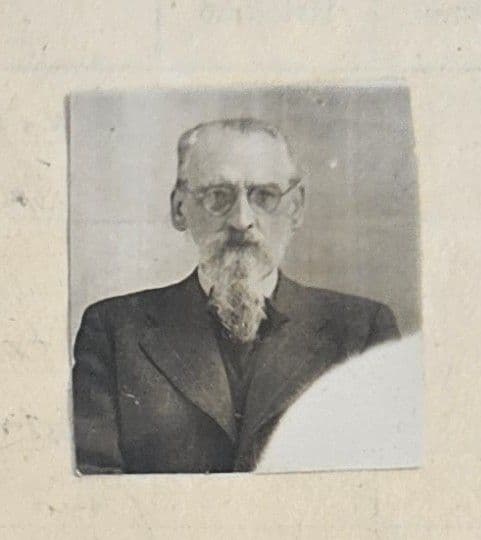
Lev Karsavin
- Memory diploma granted:2026
Lev Karsavin (1882–1952) was born in Petrograd (Saint Petersburg). He studied at the Department of History and Philosophy of Petrograd University, where he obtained Master’s and doctoral degrees in World History. From 1906 to 1921, he held positions as an associate professor and a professor at the Petrograd Institute; from 1912 to 1921, he was also the Institute’s inspector, and he also served as Rector in 1921. After leaving Soviet Russia, he sought to establish himself in Lithuania and in 1928, became a full professor at the World History Department of the Faculty of Humanities at the University of Lithuania. In 1940, together with other lecturers and students of the humanities and social sciences from Vytautas Magnus University (known by that name since 1930), he was transferred to the Faculty of Humanities of Vilnius University (from 1944, the Faculty of History and Philology), where he served as Head of the World History Department until 1946. In 1946, he submitted a request to resign on health grounds. According to Vilnius University historical research, his teaching activities were viewed negatively by the Higher Education Sector of the Central Committee of the Communist Party of Lithuania (Bolsheviks) because of his allegedly “anti-Marxist positions”. Memoirs about Karsavin and his family suggest both the fact and reasons for his removal from the University: “In 1945, he was prohibited from teaching world history because of inappropriate political views, though he was allowed to lecture on the history of aesthetics. That same year, he was appointed Director of the Art Museum, but was soon removed from both the University and the Art Museum. This happened because Karsavin refused to vote in the elections to the Supreme Soviet of the USSR and condemned the Soviet occupation of Lithuania”. From 1944 to 1949, he served as Director of the Vilnius Art Museum and was Professor at the Vilnius Art Institute. In 1949, he was arrested and deported to Komi, where he continued his research and creative work as circumstances allowed. He died in the Abez labour camp in 1952.