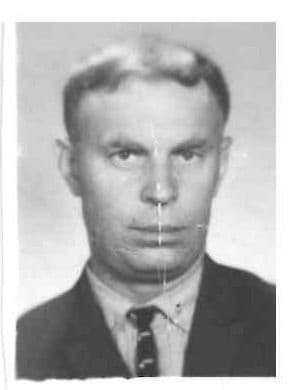
Viktoras Petkus
- Memory diploma granted:2026
Viktoras Petkus (1930–2012) was born in the village of Aleksandrai, Raseiniai County. In 1941, he completed primary school in Raseiniai Rural District and enrolled in Raseiniai Gymnasium. As he later stated in his autobiography, he had to interrupt his studies due to financial difficulties. Records indicate that in 1947, he was arrested for participating in the Ateitininkai (Lithuanian Catholic youth organisation) movement and distributing underground publications. He was sentenced to five years’ imprisonment in labour camps in Komi; after attempting to escape, his sentence was extended to ten years. In 1953, following Stalin’s death, he was released early. In 1954, after completing secondary school in Raseiniai as an external student, he worked in the same town in a number of positions, including as an electrician at a power plant, an accountant, and an agricultural technician at a meteorological station. In 1956, he arrived in Vilnius and passed the entrance examinations for Lithuanian language and literature studies at the Faculty of History and Philology of Vilnius Vincas Kapsukas State University. However, his candidacy was not approved in the final selection process, and Viktoras Petkus was ultimately not admitted. In 1957, after participating in the All Saints’ Day commemoration at Rasos Cemetery, he was arrested again and charged with possession of Lithuanian anti-Soviet literature. He was imprisoned for seven years in labour camps in Mordovia and Irkutsk. On 15 December 1966, he applied for a position as an instrument technician in the Cardiovascular Laboratory of the University’s Faculty of Medicine. He was employed from 12 January 1967; however, on 23 September 1968, he submitted a request to resign, as he was transferring to another job. The real reason V. Petkus lost his position was that he had organised an excursion for colleagues from the Faculty of Medicine to Rasos Cemetery and delivered a speech there.
In 1976, together with other dissidents, he founded the Lithuanian Helsinki Group in Vilnius and began publishing the underground periodical Lietuvos archyvas (The Lithuanian Archive). In 1977, he co-founded the Supreme Joint Committee of the National Movements of Lithuania, Latvia, and Estonia. That same year, he was again sentenced for anti-Soviet activities to three years’ imprisonment, seven years in a strict-regime labour camp, and five years of exile. He was held in Vladimir and Chistopol prisons, and later in a labour camp in the Perm region. He was released in 1988.
In 1994, Viktoras Petkus was awarded the Knight’s Cross of the Order of the Lithuanian Grand Duke Gediminas; in 1999, the Commander’s Cross of the Order of the Cross of Vytis; and in 2000, the Lithuanian Independence Medal. In 2007, he received the Ukrainian Order “For Courage” (First Class), and in 2011, the Order of the Cross of Terra Mariana (Third Class) of Estonia. In 2011, he was also awarded the Honorary Badge “Star of Lithuanian Diplomacy” from the Ministry of Foreign Affairs of the Republic of Lithuania.